Introduction
For global automotive care brands, industrial product companies, and household cleaning businesses, choosing the right aerosol manufacturer is one of the most important decisions when developing new products.
Aerosol products may appear simple from the outside, but successful aerosol manufacturing requires much more than filling liquid into cans. A professional manufacturer must have strong capabilities in formulation development, propellant selection, production management, quality control, safety compliance, and supply chain coordination.
With increasing demand for private label and customized aerosol products worldwide, more brands are looking for reliable partners who can provide complete aerosol contract manufacturing solutions instead of simple filling services. Making the wrong choice may result in product leakage, poor spray performance, and even rejection due to non-compliance with transportation regulations regarding flammability.
This guide explains the key factors buyers should consider when selecting an aerosol manufacturer and how modern manufacturing capabilities can influence product quality, delivery reliability, and long-term business growth.Not sure which propellant fits your formula? Explore our full Aerosol OEM services to see how we can bring your product to life.
1. What Makes a Professional Aerosol Manufacturer?
A reliable aerosol manufacturer should not only have production equipment but also a complete manufacturing system covering the entire product lifecycle.
A qualified manufacturing partner should provide:
- Product formulation development
- Aerosol filling technology
- Packaging solutions
- Quality inspection
- Production traceability
- Export support
For automotive, industrial, and household aerosol products, manufacturing consistency is especially important because small variations in formulation or filling processes can affect:
- Spray performance
- Product stability
- User experience
- Shelf life
Therefore, choosing the right manufacturer is not only about production cost. It is about finding a long-term technical and supply chain partner.
2. Aerosol Propellant Types Comparison: Understanding the Right Choice for Your Product
Propellant selection is one of the most important factors in aerosol product development.
The propellant affects:
- Spray pressure
- Atomization performance
- Product compatibility
- Emptying efficiency
- Safety requirements
Before starting an aerosol contract manufacturing project, buyers should understand the differences between common aerosol propellant systems.
LPG (Liquefied Petroleum Gas)
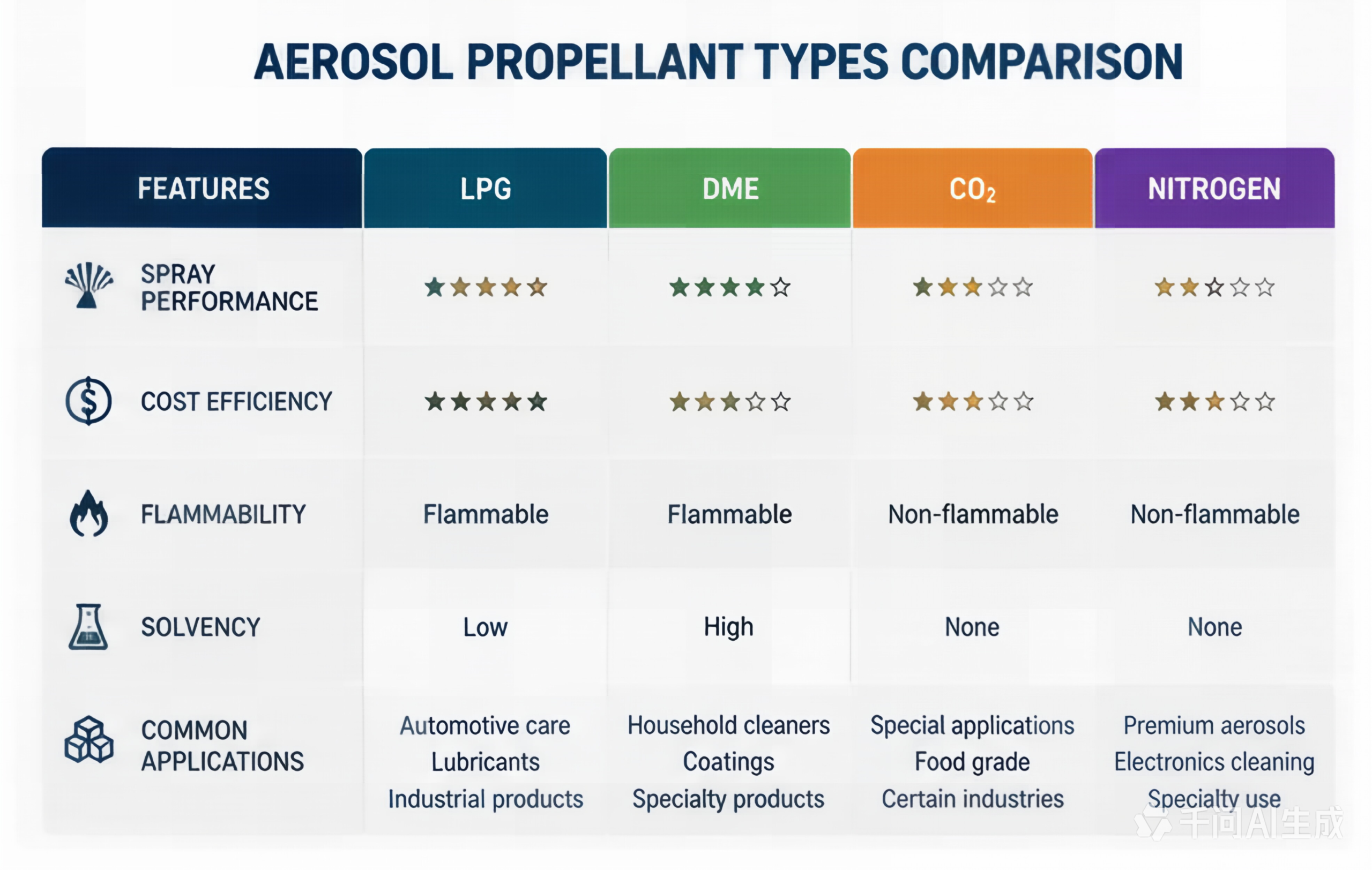
As shown in the comparison chart above, LPG is one of the most widely used aerosol propellants because of its excellent spray performance and cost efficiency. It is flammable, which requires special requirements for transportation (by sea/air) and storage.
Advantages:
- Strong and stable spray pressure
- Excellent dispensing performance
- Suitable for large-scale production
- Competitive manufacturing cost
Common Applications:
Automotive aerosol products:
- Brake cleaners
- Lubricant sprays
- Chain maintenance products
- Rust protection sprays
- Car care products
Industrial applications:
- Maintenance lubricants
- Mold release agents
- Equipment protection products
For high-volume automotive aerosol products, LPG remains one of the most commonly selected propellant systems.
DME (Dimethyl Ether)
DME provides excellent compatibility with many formulations because it has both propellant and solvent properties.
Advantages:
- Good solvency
- Compatible with water-based formulations
- Smooth spray performance
- Suitable for various applications
Common Applications:
- Household cleaners
- Industrial maintenance products
- Coatings
- Specialty aerosol products
DME is often selected when formulation compatibility and spray quality are key requirements.
CO₂ (Carbon Dioxide)
CO₂ is a non-flammable propellant option used for products requiring specific safety considerations.
Advantages:
- Non-flammable
- Cleaner product positioning
- Suitable for special applications
Considerations:
Because CO₂ behaves differently from liquefied propellants, manufacturers need professional formulation and filling experience to maintain stable spray performance.
Nitrogen (N₂)
Nitrogen is an inert propellant commonly used in applications where chemical stability and non-flammable characteristics are important.
Advantages:
- Inert gas
- Non-flammable
- Stable chemical properties
However, nitrogen-based aerosol systems require different production technologies compared with traditional LPG systems.
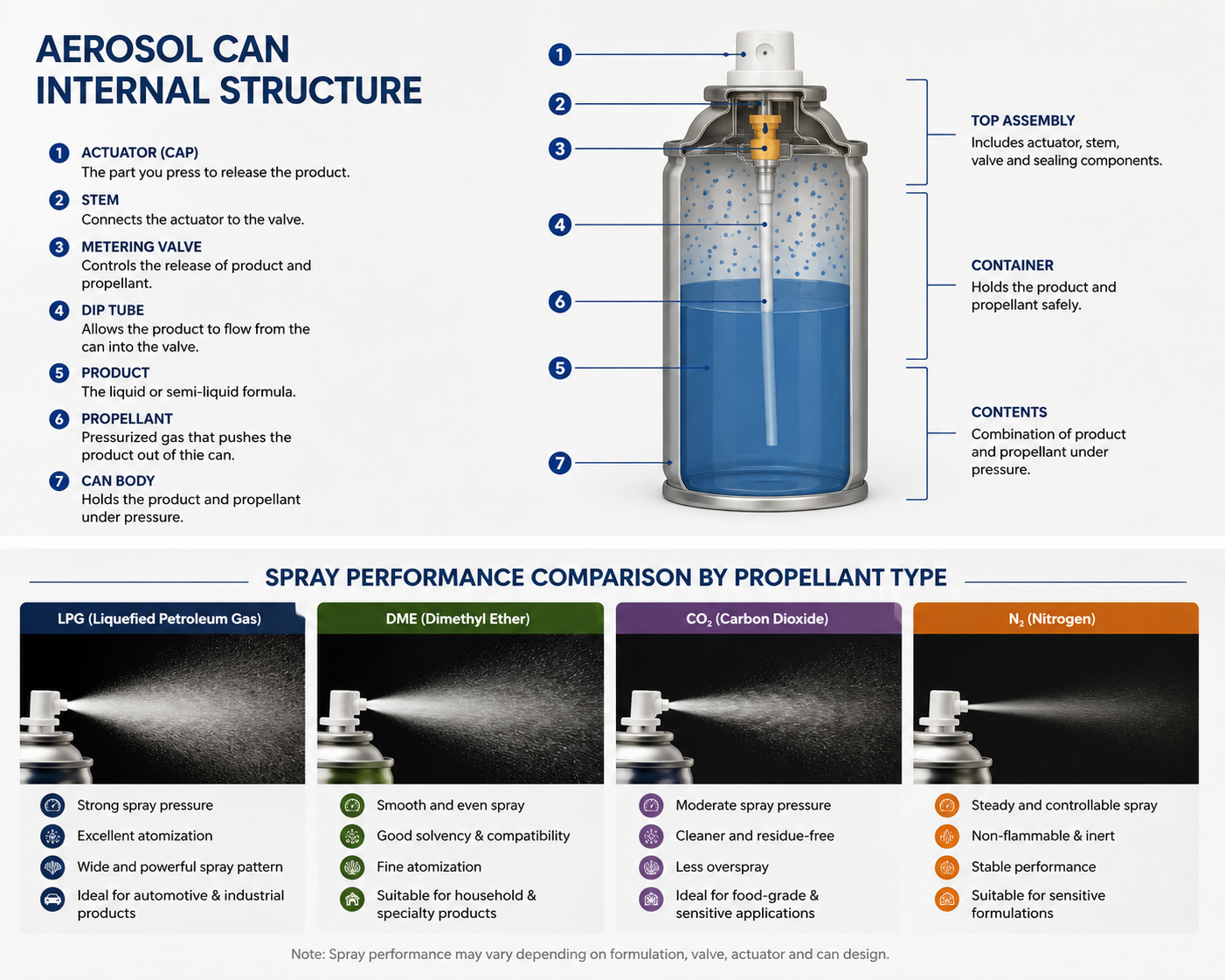
Aerosol Propellant Comparison Table
| Propellant | Spray Performance | Cost Efficiency | Flammability | Product Compatibility | Emptying Efficiency | Typical Applications |
|---|---|---|---|---|---|---|
| LPG | Excellent | High | Flammable | Good (oil-based formulas) | Excellent | Automotive, industrial aerosols |
| DME | Very good | Medium | Flammable | Excellent (incl. water-based) | Very good | Cleaning and specialty products |
| CO₂ | Medium | Medium | Non‑flammable | Limited (requires special formulation) | Low | Special applications |
| Nitrogen | Medium | Medium | Non‑flammable | Limited (requires bag-on-valve or similar) | Low | Premium and specialty aerosols |
Selecting the right propellant requires professional technical evaluation. An experienced aerosol manufacturer can help optimize the balance between performance, safety, and production cost.
3. Why Production Capacity Matters in Aerosol Contract Manufacturing
For global brands, stable supply capability is essential.
A manufacturer may produce excellent samples, but without sufficient production capacity, large-scale orders can face:
- Delivery delays
- Production bottlenecks
- Inconsistent quality
A professional aerosol manufacturing facility should have:
- Multiple production lines
- Flexible manufacturing capability
- Automated production systems
- Reliable raw material supply
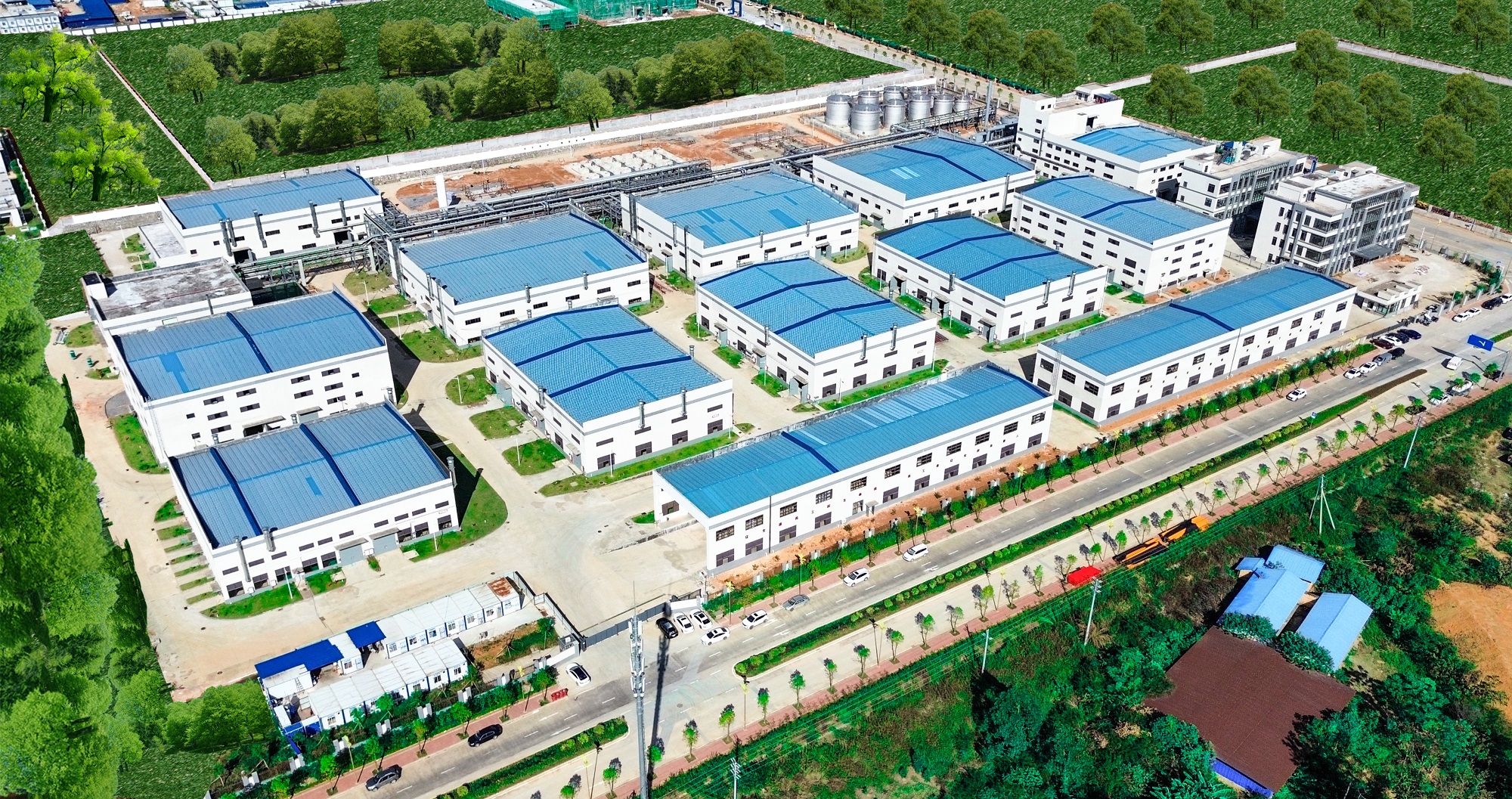
Guangdong Kingland Chemical Technology CO.,LTD operates a modern production base integrating aerosol products, household chemicals, and industrial maintenance products. Its aerosol production system includes:
- 6 fully automatic high-speed aerosol production lines
- Production speed of approximately 120–140 cans per minute per line
- Additional flexible production lines for customized orders
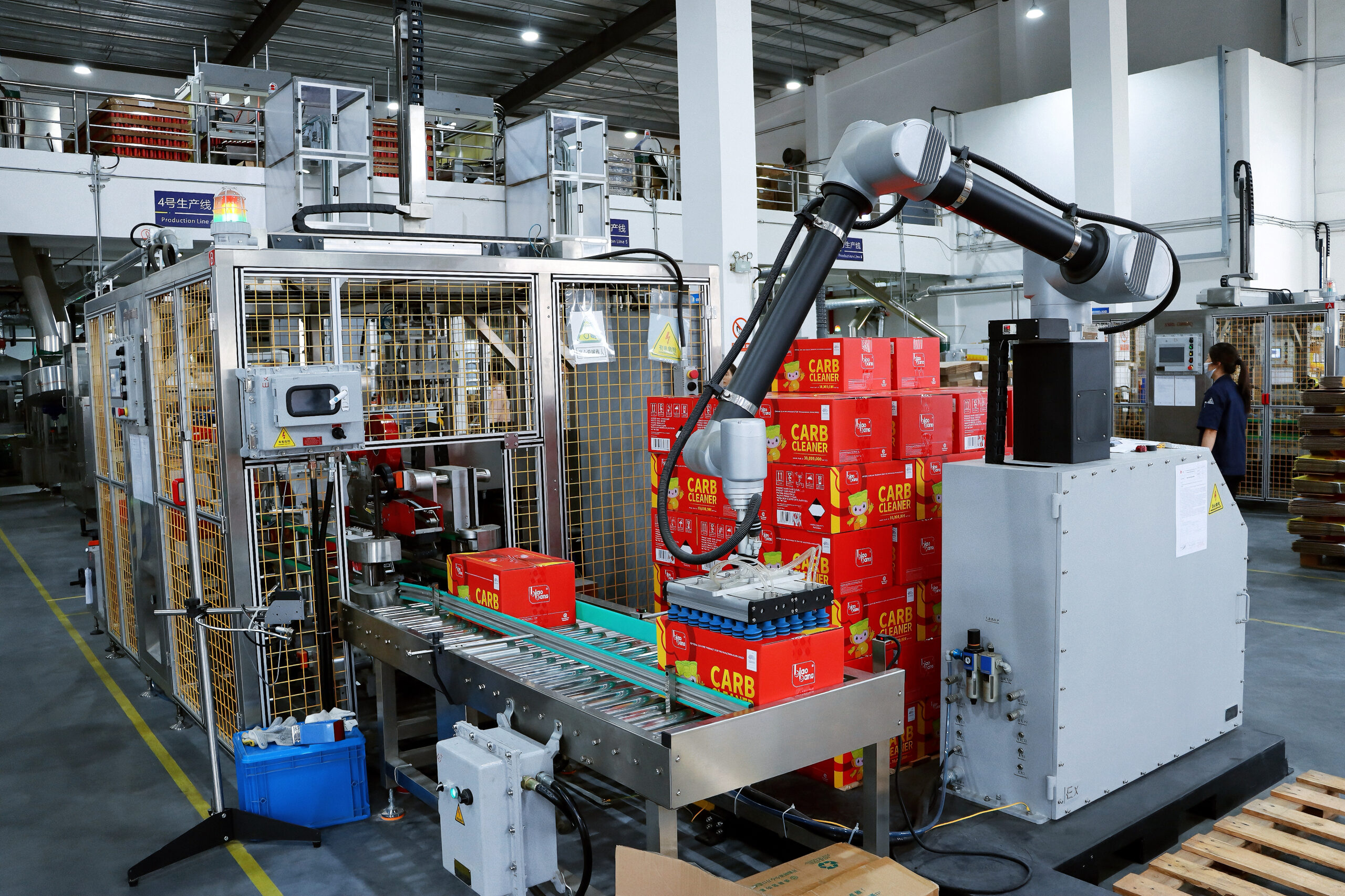
This manufacturing structure enables efficient production scheduling for different product categories and customer requirements.
4. Digital Manufacturing Systems Improve Product Consistency
Modern aerosol production increasingly depends on digital management systems.
For global buyers, digital manufacturing provides important advantages:
- Better production accuracy
- Improved batch consistency
- Complete product traceability
- Reduced human error
A professional aerosol manufacturer should implement:
Automated Formula Management
Precise ingredient control helps maintain consistent product performance.
ERP Production Integration
Connecting production data with ERP systems allows:
- Order tracking
- Batch management
- Production monitoring
Full Traceability
Each production batch can be monitored from raw materials to finished products.
Kingland has developed a digital production management system combining DCS automatic batching technology with ERP management systems to achieve accurate production control and full process traceability.
5. Quality Control: A Key Factor When Selecting an Aerosol Manufacturer
Quality control is one of the most important evaluation criteria for OEM and ODM buyers.
A reliable aerosol manufacturer should control every production stage.
Raw Material Inspection
Before production begins, raw materials should be tested and verified.
Production Process Control
Manufacturers should monitor:
- Mixing accuracy
- Filling pressure
- Packaging quality
- Production parameters
Finished Product Testing
Professional testing equipment helps ensure product reliability.
Kingland applies a complete quality management system covering:
- Incoming material inspection
- Semi-finished product inspection
- Production process inspection
- Final product inspection
The company uses professional testing equipment including:
- Gas chromatography instruments
- Aerosol can pressure testing equipment
- Water content testing equipment
This ensures consistent product performance before shipment.
6. Safety and Environmental Management in Aerosol Manufacturing
Aerosol production involves chemical materials and pressurized containers, making safety management a critical requirement.
When choosing an aerosol manufacturer, buyers should evaluate:
- Factory safety systems
- Chemical storage management
- Environmental protection measures
- Regulatory compliance
Modern aerosol factories should have:
- Professional storage systems
- Safety monitoring equipment
- Waste gas treatment systems
Kingland has established comprehensive safety management systems, including intelligent safety monitoring and standardized operational procedures.
The factory is also equipped with RTO waste gas treatment equipment to process VOC emissions and support environmentally responsible production.
7. OEM & ODM Aerosol Manufacturing: From Concept to Finished Product
Many international brands today prefer OEM and ODM cooperation because it reduces development time and improves market flexibility.
A professional aerosol OEM/ODM partner can support:
Product Development
Including:
- Formula optimization
- Performance improvement
- Application testing
Manufacturing Solutions
Including:
- Aerosol filling
- Packaging selection
- Customized production
Supply Chain Support
Including:
- Production planning
- Quality management
- Global shipment coordination
For automotive brands, this capability is especially valuable because different markets may require different product formulations and packaging solutions.
8. Checklist: How to Choose the Right Aerosol Manufacturer
Before selecting a manufacturing partner, buyers should evaluate the following factors:
Manufacturing Capability
Does the factory have sufficient production capacity?
Can it support both large orders and customized projects?
Technical Capability
Can the manufacturer assist with formulation development?
Does it understand propellant selection?
Quality System
Are raw materials and finished products tested?
Is production traceability available?
OEM/ODM Experience
Can the manufacturer provide complete solutions?
Does it support private label products?
Safety and Compliance
Does the factory have proper chemical safety management?
Does it follow environmental requirements?
Conclusion
Choosing the right aerosol manufacturer is a strategic decision that directly affects product quality, customer satisfaction, and business growth.
A professional manufacturing partner should provide more than production capacity. It should offer technical expertise, reliable quality control, flexible OEM/ODM solutions, and stable global supply capability.
For companies looking for aerosol contract manufacturing solutions in automotive, industrial, and household applications, partnering with an experienced aerosol manufacturer can create long-term value and competitive advantages.
With advanced production facilities, professional R&D capabilities, and comprehensive manufacturing systems, Guangdong Kingland Chemical Technology CO.,LTD provides customized aerosol solutions for global brands seeking reliable OEM and ODM cooperation.