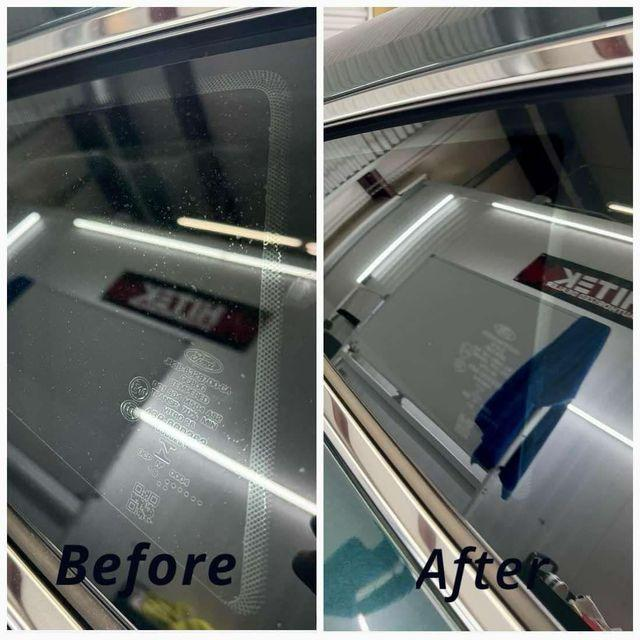
Removing old window tint or sun protection film often leaves stubborn adhesive residue on automotive glass. This residue can be difficult to clean using ordinary glass cleaners.
Sun film adhesive remover helps soften and loosen remaining glue, making the cleaning process easier. It is a practical solution for automotive detailing, window tint replacement, and suitable glass maintenance applications.
For automotive care brands and distributors, adhesive removal performance and surface compatibility are important factors when choosing or developing this type of product.
1. Common Applications of Sun Film Adhesive Remover
Sun film adhesive remover supports several cleaning applications when the formulation is suitable for the target surface.
Common applications include:
- Window Tint Removal: Helps remove adhesive residue after peeling off old automotive tint films.
- Sun Film Replacement: Supports glass preparation before installing replacement films.
- Sticker Glue Removal: Helps loosen stubborn sticker and label adhesive from compatible glass surfaces.
- Car Wrap Residue: Assists with removing suitable adhesive residues from approved surfaces.
- Household Glass Cleaning: Supports adhesive removal from compatible glass doors, windows, and mirrors.
However, different adhesives and surfaces require different cleaning methods. Therefore, users should check product compatibility before application.
2. Key Performance Requirements
Fast-Acting Adhesive Removal
An effective formulation helps soften and loosen stubborn adhesive residue. As a result, users may reduce the effort required during cleaning.
However, removal time depends on the adhesive type, residue thickness, and application conditions.
Glass Surface Compatibility
A suitable cleaner should remove adhesive without damaging compatible glass surfaces when users follow the product instructions.
In addition, manufacturers should evaluate compatibility with nearby seals, coatings, and trim materials.
Convenient Application
Trigger-spray packaging allows users to apply the cleaner to targeted areas. Therefore, packaging design and spray performance are important considerations for product development.
Cleaning Comfort
For automotive detailing applications, fragrance and odor characteristics can also influence the user experience.
3. How to Remove Window Tint Adhesive
Proper cleaning helps remove remaining glue while reducing the risk of surface damage.
Follow these general steps:
- Prepare the glass: Remove loose film fragments and visible debris.
- Check compatibility: Test the cleaner on a small, inconspicuous area.
- Apply the remover: Spray onto approved glass surfaces according to the label instructions.
- Allow contact time: Let the formulation soften the adhesive for the recommended period.
- Remove the residue: Gently wipe with a suitable microfiber cloth or use a glass-safe tool where permitted.
- Finish cleaning: Remove remaining cleaner and residue, then inspect the glass.
For vehicle windows, avoid applying the remover to unapproved coatings, rubber seals, electronic components, and rear-window defroster elements.
4. Product Example: BIAOBANG Sun Film Adhesive Remover
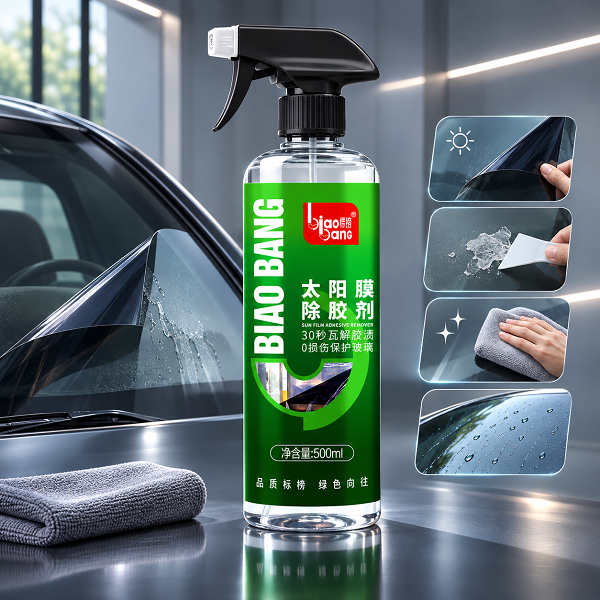
BIAOBANG Sun Film Adhesive Remover is developed for removing residual adhesives left behind by sun films, window tint, stickers, and other suitable adhesive materials.
The product features:
-
- Fast-acting adhesive softening and loosening
- Application on compatible glass surfaces
- Convenient trigger-spray dispensing
- Fresh, low-irritation scent as described in the product specifications
- 500ml bottle packaging
These features make it suitable for relevant automotive detailing and glass maintenance applications when used according to its instructions.
5. OEM/ODM Adhesive Remover Manufacturing
For automotive care brands, importers, and distributors, private-label adhesive remover development requires careful formulation and packaging evaluation.
Important considerations include:
- Adhesive Removal Performance: Match the formulation to the intended residue types.
- Material Compatibility: Evaluate performance on target glass and surrounding materials.
- Application Characteristics: Select suitable spray patterns and dispensing systems.
- Packaging Customization: Choose bottle sizes, trigger sprayers, and labeling options.
- Product Stability: Assess formulation stability and packaging compatibility.
KingLand provides OEM/ODM manufacturing services for automotive care and related chemical products.
Brands planning an adhesive remover product can discuss formulation requirements, packaging options, target markets, and estimated order quantities with our team.
Conclusion
Sun film adhesive remover is a useful cleaning product for window tint replacement, sticker residue removal, and suitable glass maintenance applications.
For private-label brands, effective adhesive removal, surface compatibility, and convenient packaging are important development considerations.
Planning your own adhesive remover product?
Contact KingLand to explore suitable OEM/ODM manufacturing options for your target market.
Frequently Asked Questions
What is sun film adhesive remover used for?
It helps soften and remove adhesive residue left behind by window tint films, sun films, stickers, and other compatible adhesive materials.
Can adhesive remover damage automotive glass?
Compatibility depends on the formulation and glass surface. Users should follow product instructions and avoid contact with unapproved coatings and surrounding materials.
Can it remove old window tint glue?
A suitable formulation can help loosen old window tint adhesive. However, results depend on the glue type, thickness, and cleaning conditions.
Can KingLand develop private-label adhesive remover products?
KingLand supports relevant OEM/ODM chemical manufacturing projects. Customization options depend on formulation feasibility, packaging requirements, and the target market.